Reflections on Bolivia’s Digital Future from the Global Compact’s Artificial Intelligence Working Group

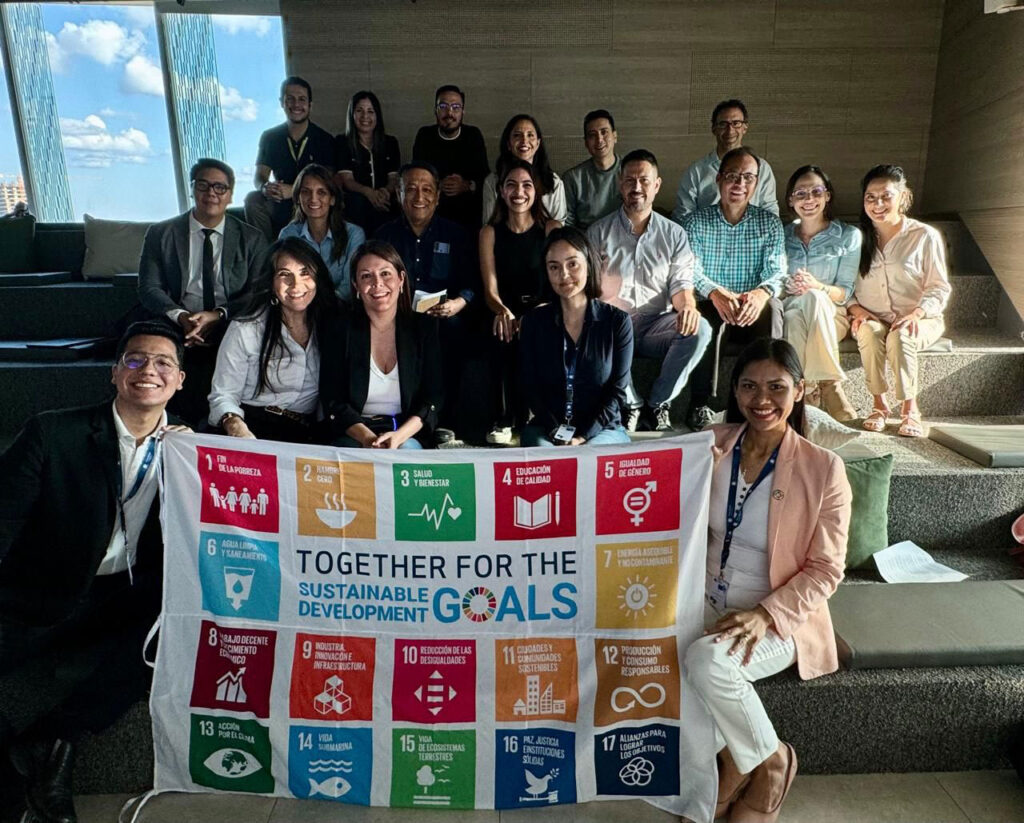
On 23 July 2025 an unusual but significant event took place: the first meeting of the Artificial Intelligence (AI) Working Group of the United Nations Global Compact in Bolivia, attended by leading companies in the national economy such as Itacamba, Sinchi Wayra, Banco Bisa and Laboratorios Bagó, together with technology firms including DATEC and VIVA. Representing Moreno Baldivieso Estudio de Abogados, it was a privilege to take part in this inaugural meeting, which from the outset charted a roadmap by forming its first sub-groups.
Let us be clear: Bolivia still has a long way to go in technology, and in artificial intelligence in particular. That is precisely why this Global Compact working group mattered. The presence of the heads of our largest companies, eager to engage with technological questions in Bolivia, was a forceful statement of intent that the country does not mean to be left behind by new technologies.
The potential of AI is more than evident. A report prepared by Stanford scholars in 2021 noted that AI had made substantial progress over the preceding five years, even though no technology yet exists that can recreate human intelligence (Littman et al., 2021).1 Not everything is rosy, however: AI is something of a double-edged sword, carrying risks that end in discrimination, deepfakes and even physical harm.
Opportunities in AI Adoption: Productivity and Sustainable Development
In this first approach, the working group considered a number of opportunities for Bolivian companies with respect to the adoption of AI and the improvement of sustainability. Among those discussed were the following:
- Efficient management of natural resources: related to SDGs 6, 7, 12 and 13.
- Impact measurement and traceability: related to SDGs 9, 12, 13 and 16.
- Cleaner and smarter production: related to SDGs 9, 12 and 13.
- Sustainable logistics and supply chains: related to SDGs 9, 12, 13 and 17.
- Innovation in sustainable products and services: related to SDGs 8, 9 and 12.
- Organisational culture and sustainable decision-making: related to SDGs 12, 16 and 17.
- Sustainable finance and climate risk management: related to SDGs 8, 13 and 17.
Properly pursued by Bolivian companies, these opportunities could meet the country’s particular needs by building on its existing strengths. A company such as Sinchi Wayra, which operates Bolivia’s largest underground mines, might deploy AI systems to optimise extraction, maximising yield while minimising water and energy use and thereby reducing its environmental footprint.
As noted at the outset, however, Bolivia lags well behind on the infrastructure and development of AI models. It ranked last in the region in 2023 according to CENIA (Centro Nacional de Inteligencia Artificial, 2023).2 For now, it is fanciful to think that Bolivia should compete in a global race in which, seemingly, only the largest players are admitted. Even so, the value of AI for Bolivia lies in its practical application to existing problems, in the sectors and industries that are key to the Bolivian economy.
Challenges in AI Adoption: Ethical and Legal Risks
AI presents many challenges, perhaps more than we care to admit. A number of authors have observed that algorithms operate as black boxes, deliberately concealing their inner workings behind layers of complexity and opacity (Dubber et al., 2020).3 That leads inevitably to questions of algorithmic bias, discrimination and inequality, and to concerns about the transparency and explainability of AI systems.
It should also be said that the use of AI poses a direct challenge to sustainability, given its energy consumption and the further direct and indirect impacts associated with environmental harm. These challenges will have to be addressed through policies grounded in scientific evidence, and through a rational cost-benefit analysis that weighs technological development against sustainable development (Bashir et al., 2024).4
All that said, the path towards adopting AI in Bolivia, and new technologies more broadly, should not be walked half-heartedly. The advantages and opportunities that adoption may bring ought to be taken up in full, and in that respect the Global Compact’s AI Working Group stands out as a first impetus.
This first step will of course need to be accompanied by a continuing, multi-sector national dialogue involving not only the private sector but also academia and Bolivian civil society. Only through such a dialogic process will the foundations be laid for effective and efficient governance of AI and new technologies in Bolivia.
References
- Littman, M. L., Ajunwa, I., Berger, G., Boutilier, C., Currie, M., Doshi-Velez, F., Hadfield, G., Horowitz, M. C., Isbell, C., Kitano, H., & others. (2021). Gathering strength, gathering storms: The one hundred year study on artificial intelligence (AI100) 2021 study panel report. Stanford University. https://ai100.stanford.edu/sites/g/files/sbiybj18871/files/media/file/AI100Report_MT_10.pdf ↩︎
- Centro Nacional de Inteligencia Artificial. (2023). Índice latinoamericano de inteligencia artificial 2023 [Latin American artificial intelligence index 2023]. https://www.2023.indicelatam.cl/wp-content/uploads/2023/08/ILIA-2023.pdf ↩︎
- Dubber, M. D., Pasquale, F., & Das, S. (2020). The Oxford handbook of ethics of AI. Oxford University Press. ↩︎
- Bashir, N., Donti, P., Cuff, J., Sroka, S., Ilic, M., Sze, V., Delimitrou, C., & Olivetti, E. (2024). The climate and sustainability implications of generative AI. An MIT Exploration of Generative AI. https://mit-genai.pubpub.org/pub/8ulgrckc ↩︎